
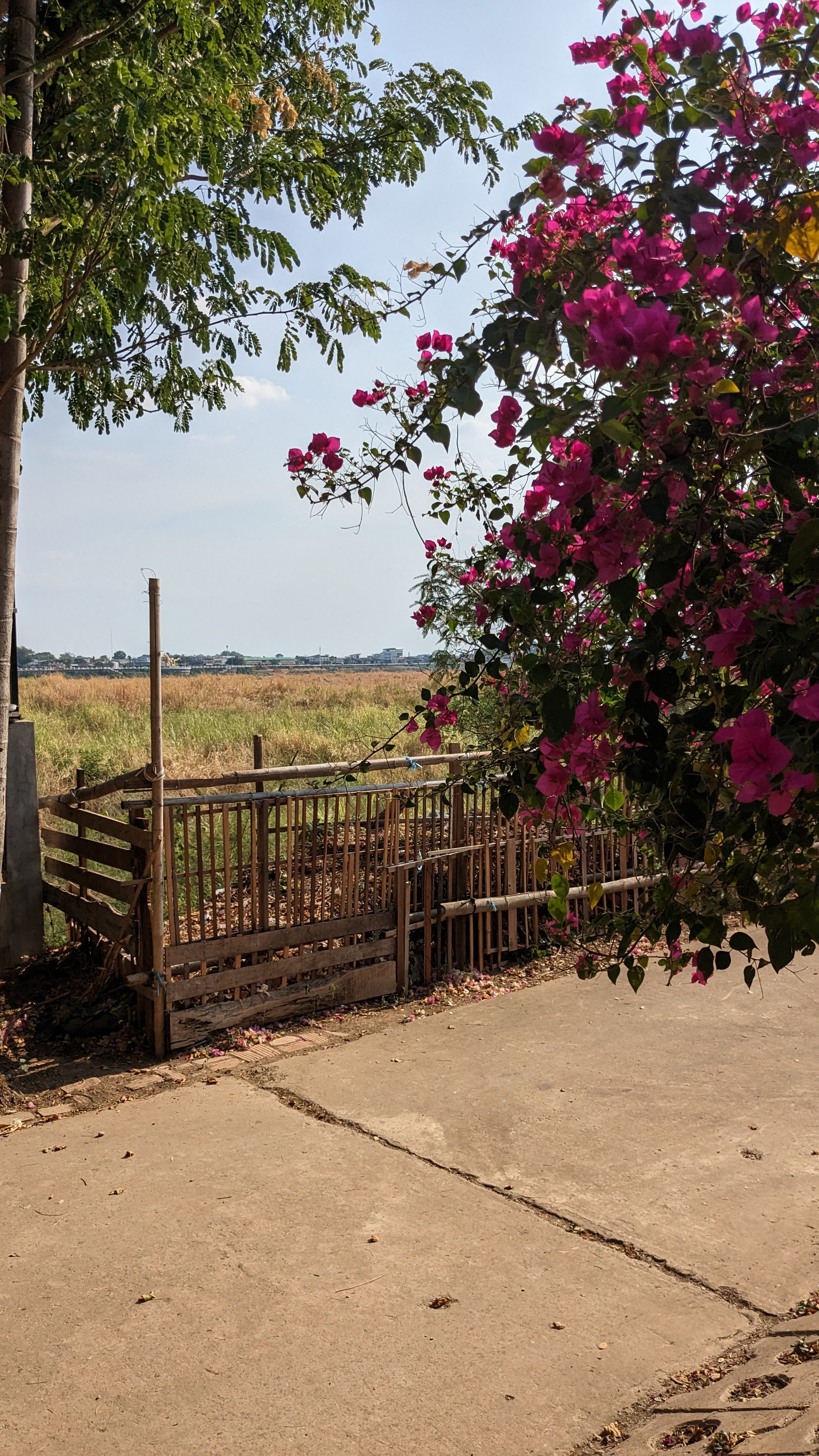
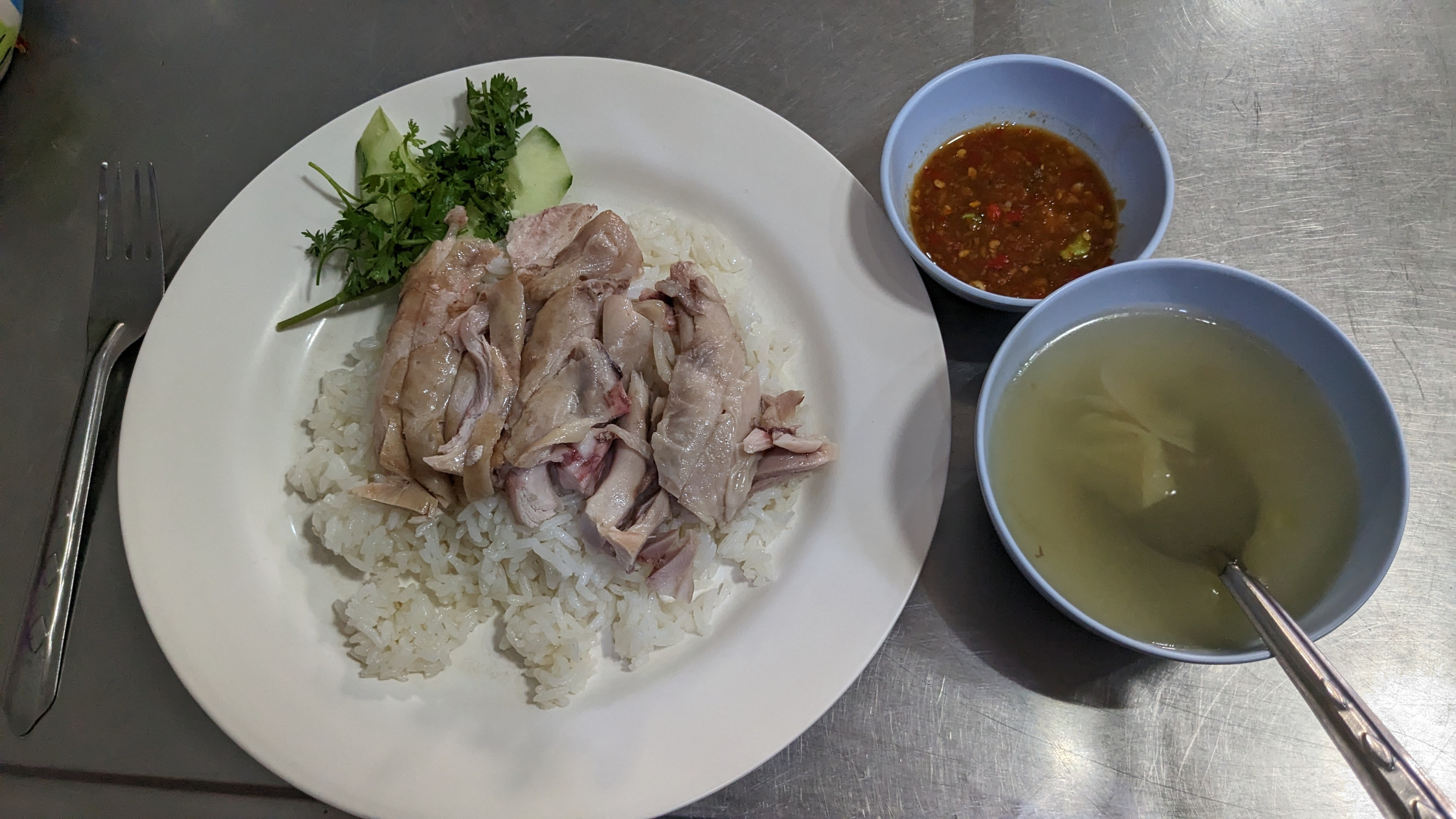
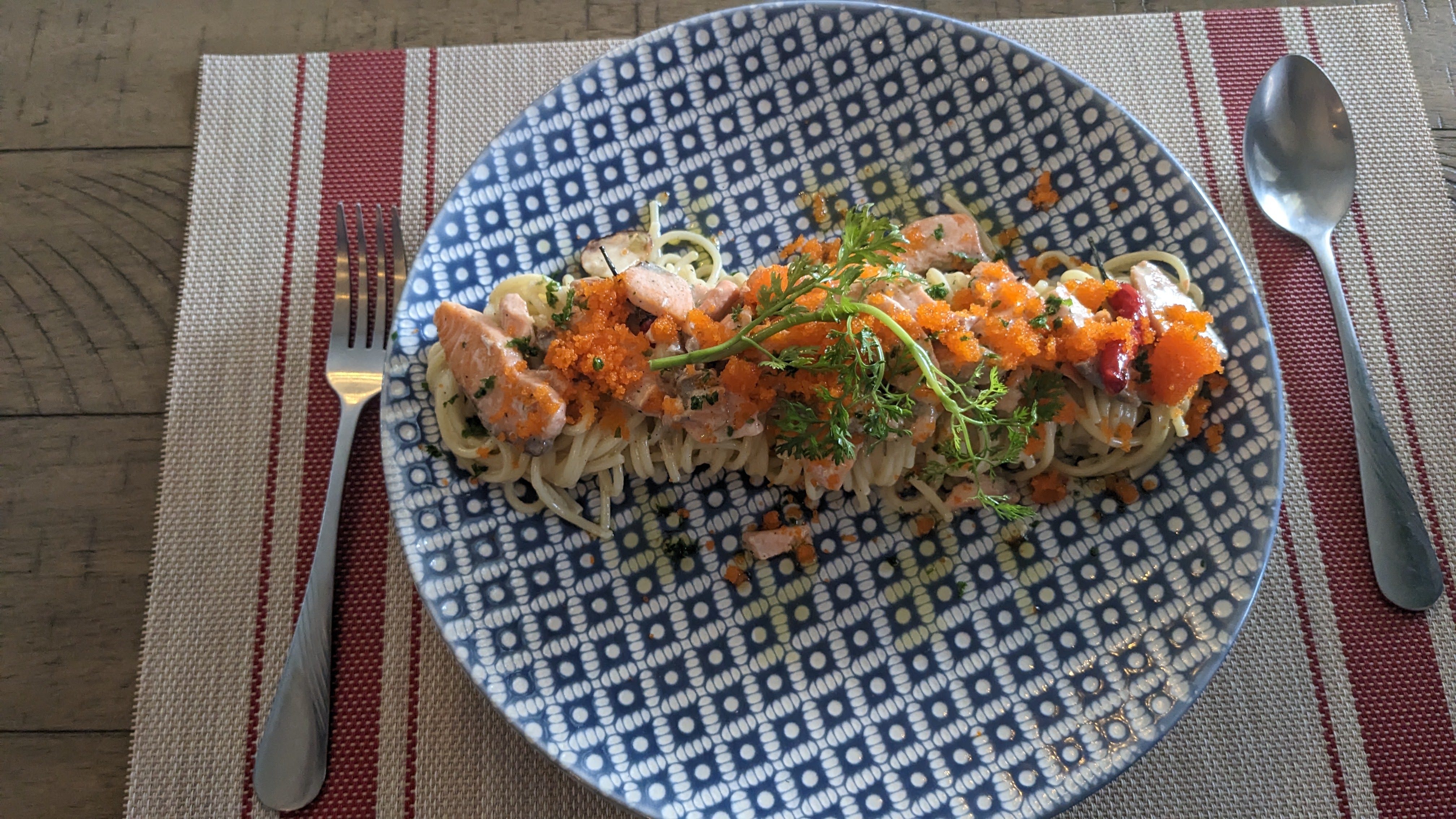
After landing in Vientiane, I spent almost an hour slowly moving through airport lines before I finally got to show my passport (and pay $40) to an immigration control officer. I didn’t have any trouble getting through and after one more bag scan I was free to set out into Laos. I started by checking in at a local hostel and then walked around for a little while to get a look at the city. Just like Thailand there were Buddhist temples dotted all over the city, filled with colorful paintings and golden Buddhas. Unlike Thailand, there was a notable absence of brands– some products like Coca Cola and Lays were still around, but the streets had a an almost total absence of chains like 7-11 McDonalds or KFC, found all over the place in big Thai cities. I didn’t understand it, but asked around and quickly realized that it was likely one of the first signs of Laos’ explicitly communist, one party state. I continued my walk, intrigued and looking for more signs of the significant differences between this new country and Thailand. I eventually found myself walking along the bank of the Mekong River, though it looked fairly dry at the time compared with the massive riverbed that contained it. I also found two delicious restaurants for lunch and dinner, one with a delicious and very classic pork over rice (with a delicious hot sauce with lots of ginger) and the other selling impressive Asian-Italian dishes that I really enjoyed. After dinner, I got my first glimpse of the fairly staggering drinking culture in the country- most shops had employees outside drinking once they closed their doors for the day, and my hostel offered free liquor for two hours in the evening. Ultimately my first half day in Laos was quite interesting, and I went to bed feeling a little tipsy but excited to see more of the city the next day.
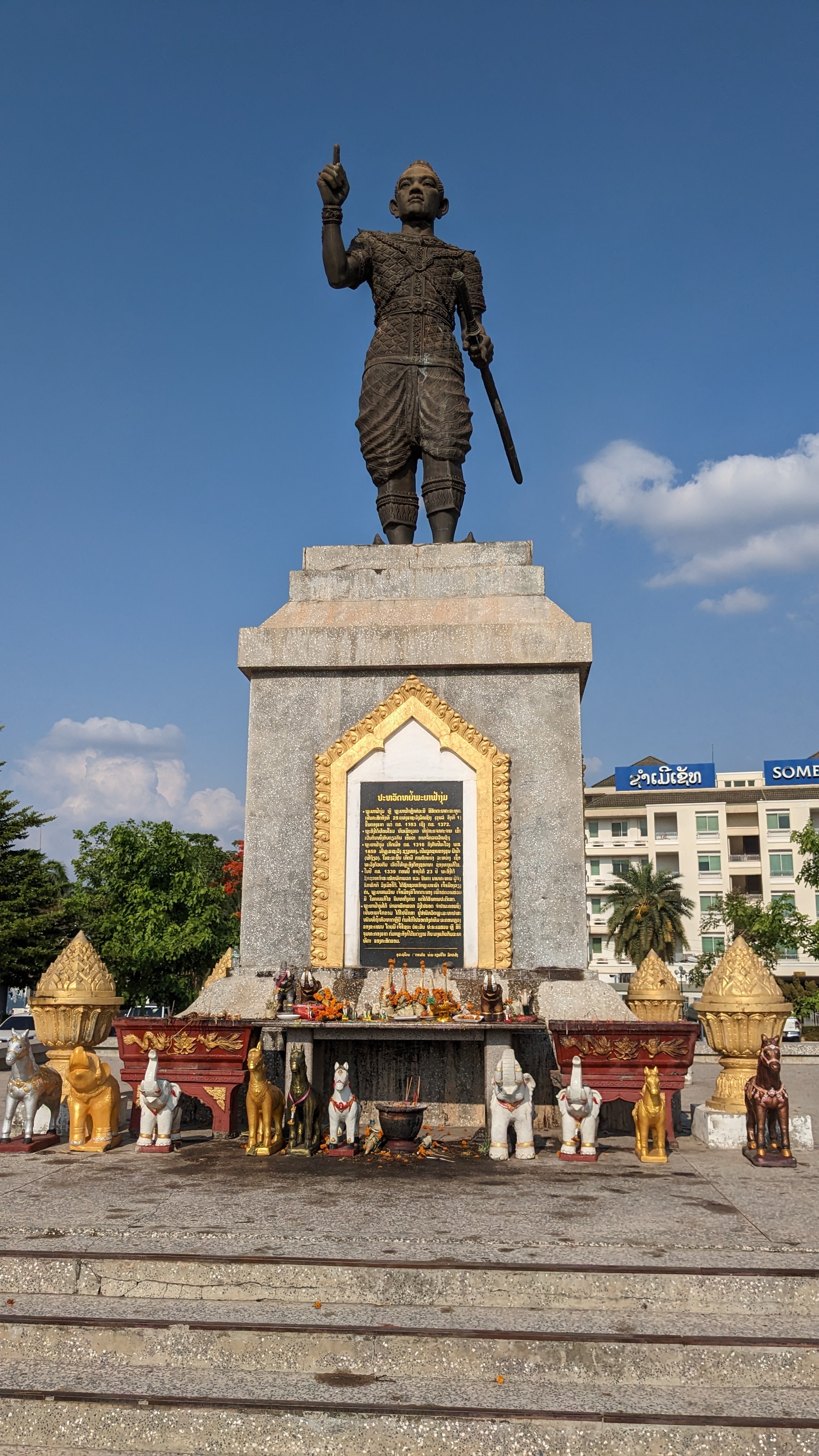
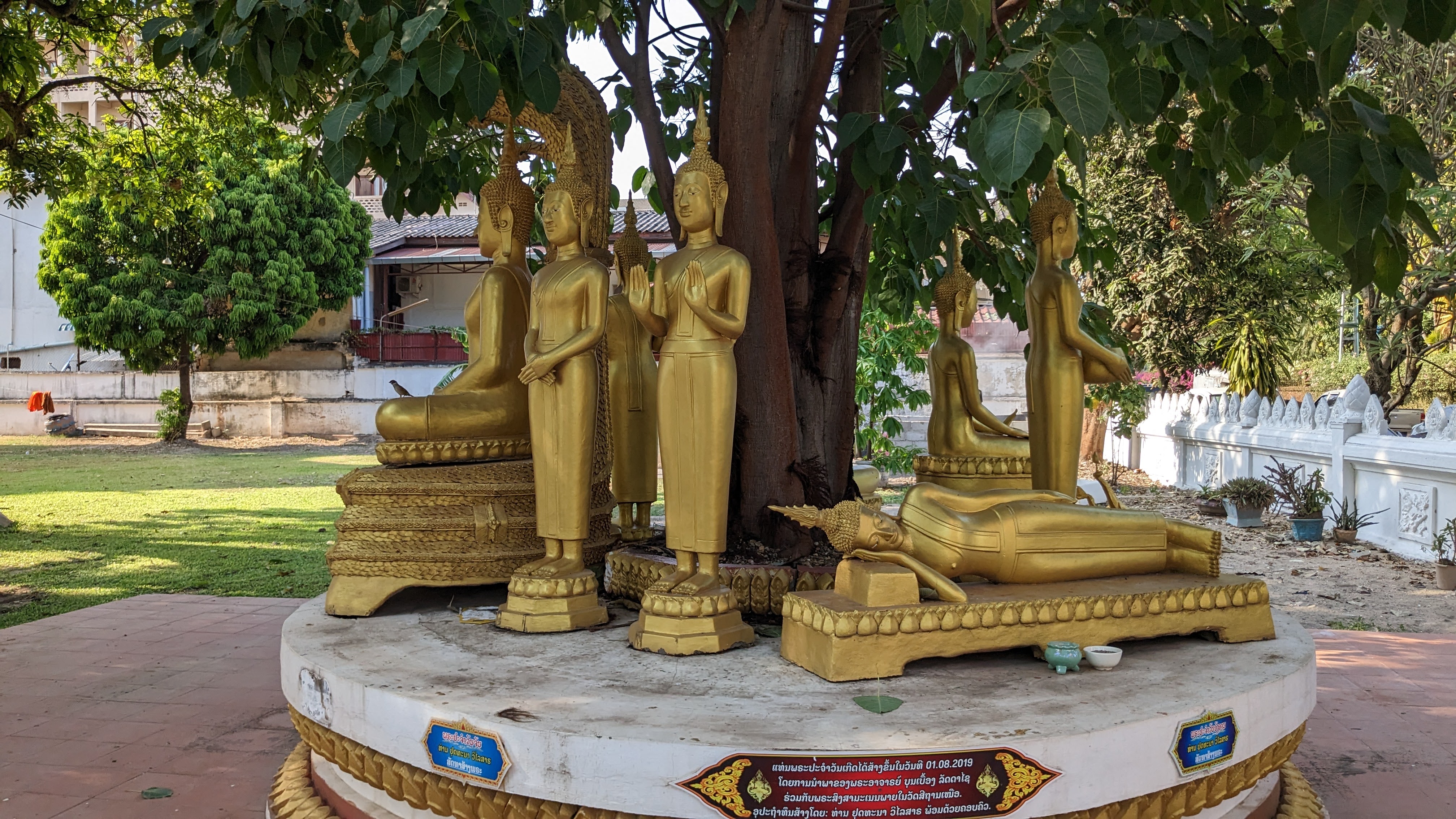

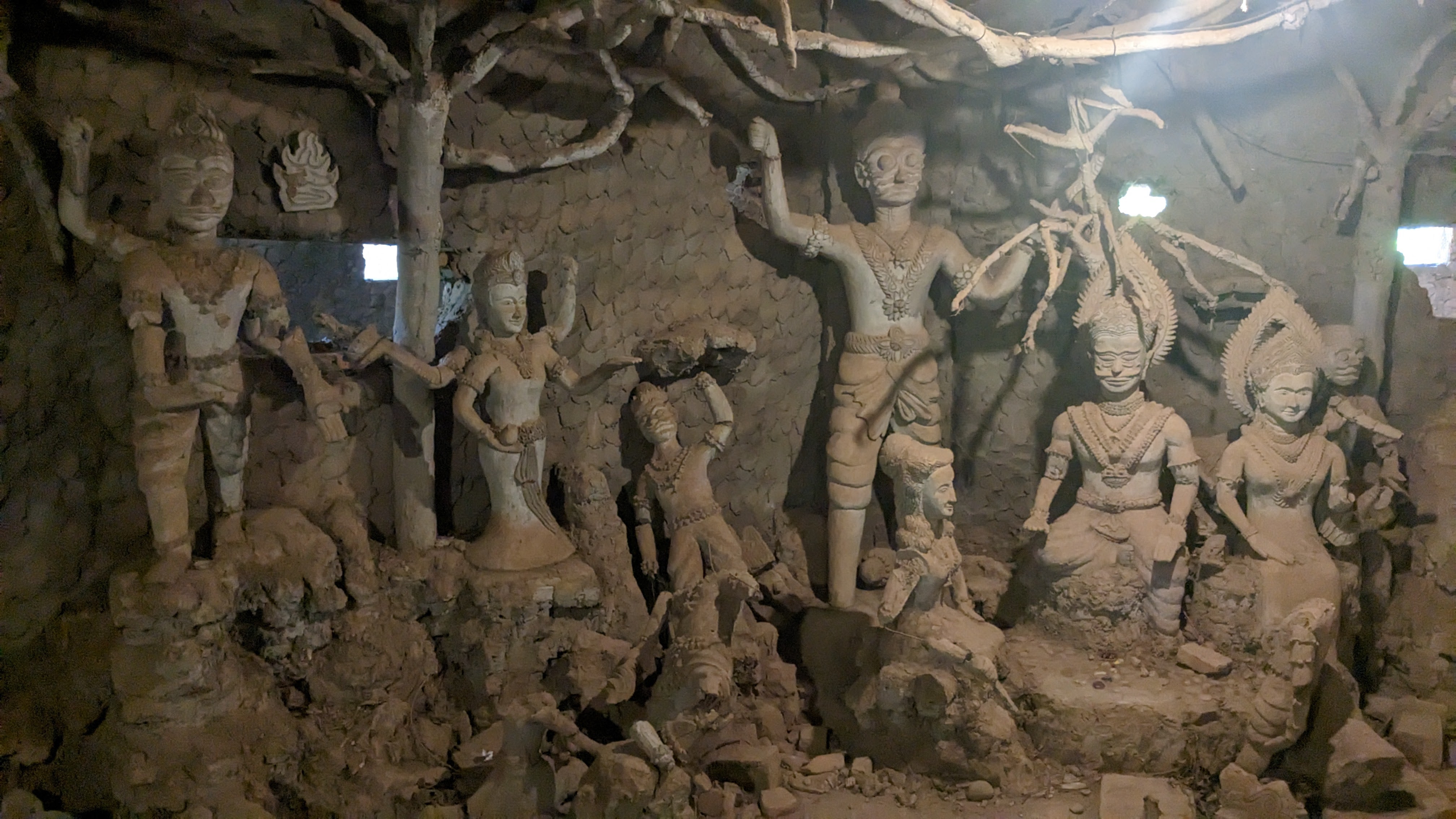
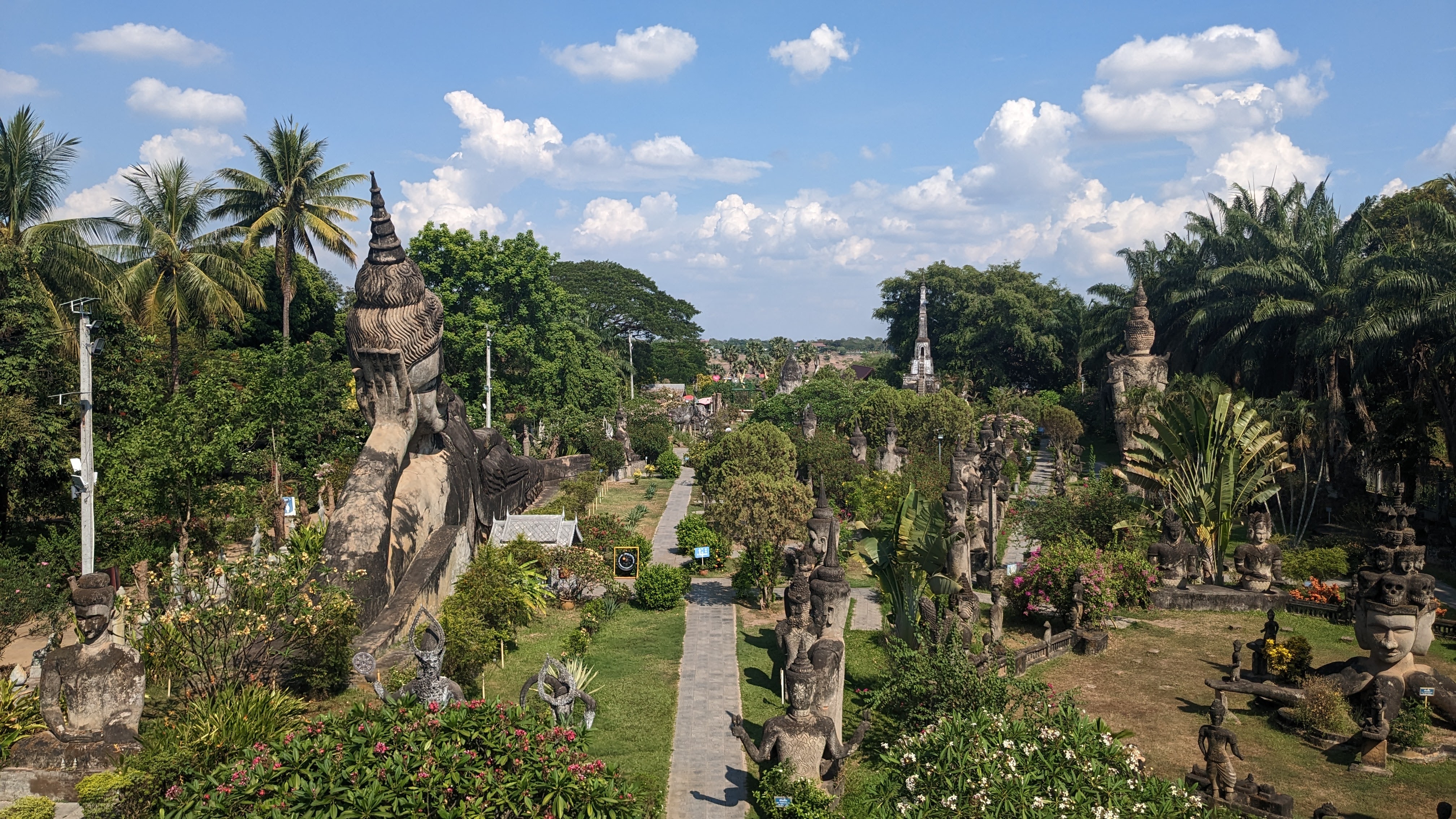
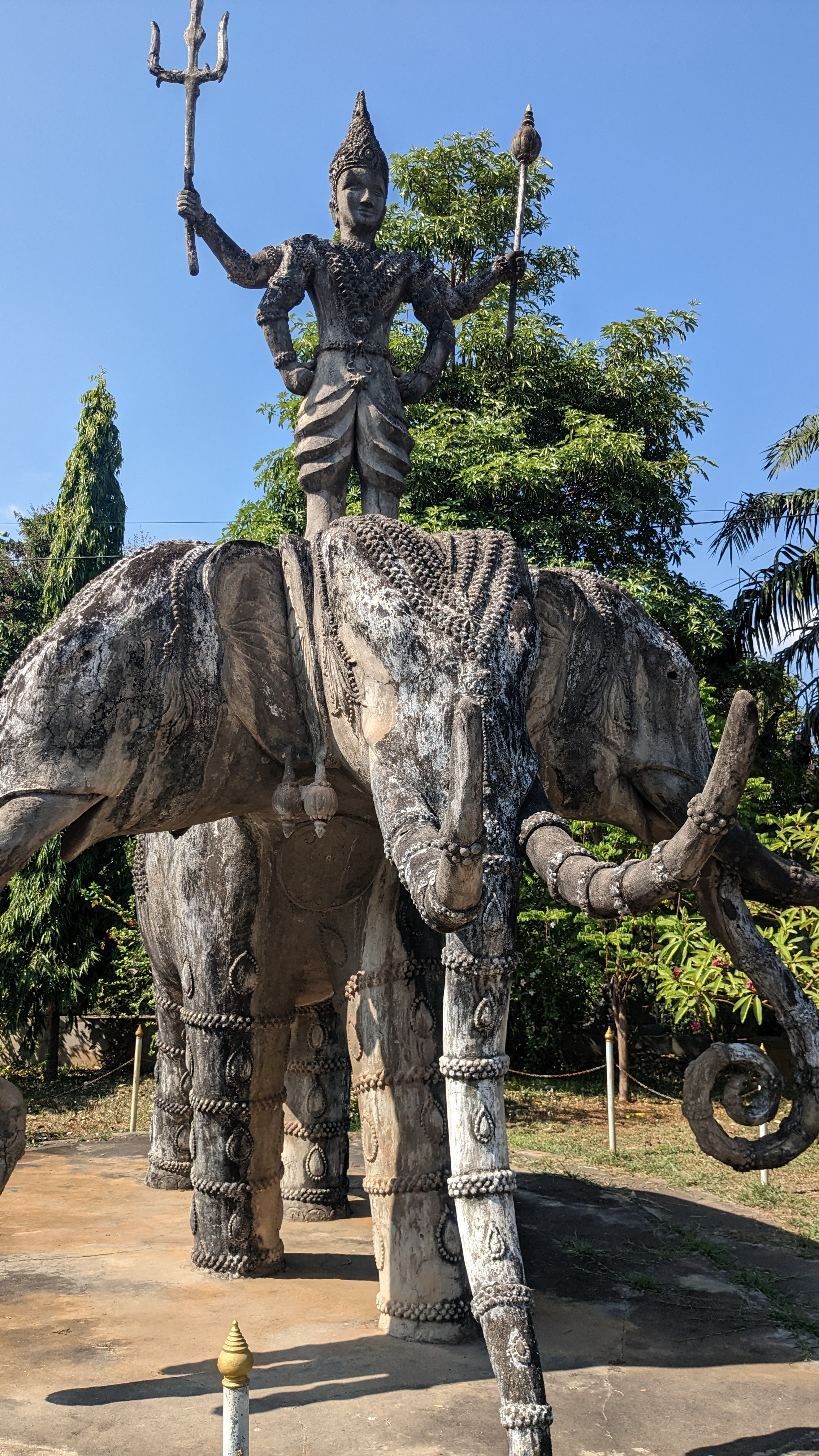
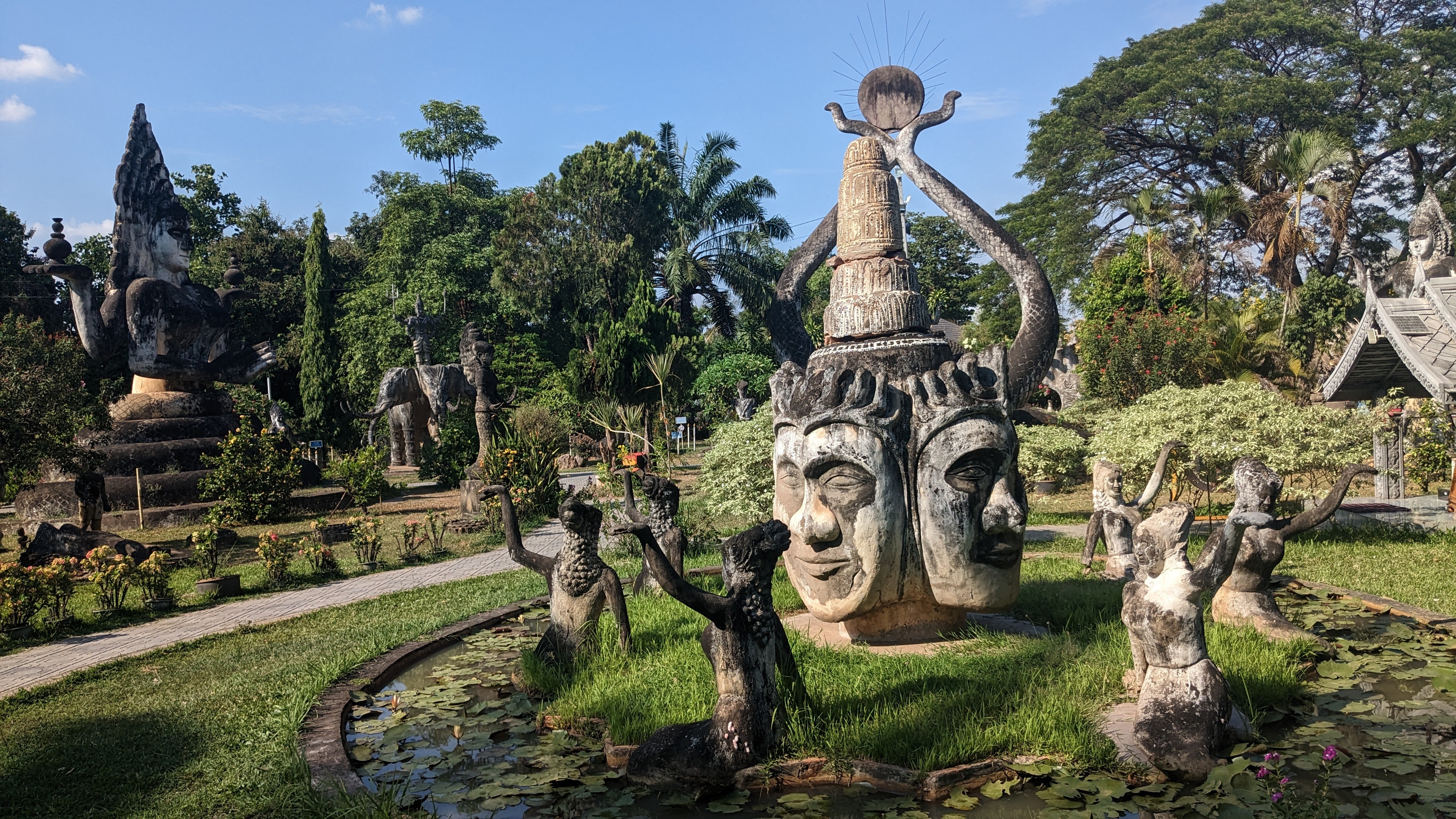
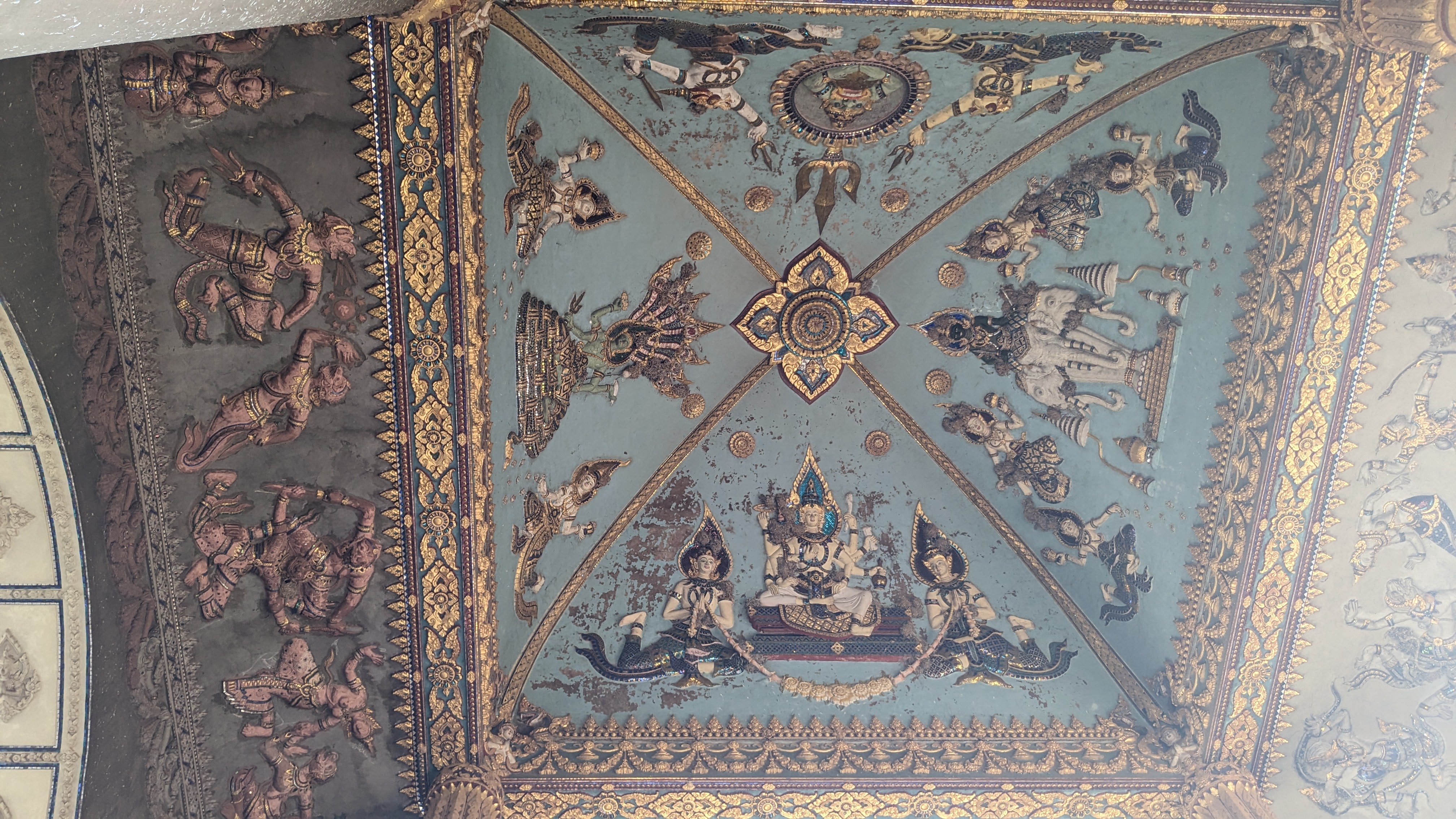
The next morning, I met a french girl named Maya who had just arrived and also planned to explore the city a little bit before moving north. We decided to split the cost of a small motorbike and ride together to one of the main nearby tourist attractions, a so-called Buddha Park towards the edge of the city. After an uneventful ride we arrived at the park and bought our tickets for less than a dollar each. We learned that it was not an actual temple (hence no dress code), but a park built in 1958 with the intent to look old, and fuse Buddhist and Hindu symbolism in a single place. Mostly the vision of a single priest-shaman who sought greater unity between the two belief systems, this knowledge added an interesting perspective that would not have been at all obvious to me from the statues themselves. The park itself was quite remarkable, with statues varying in size and shape, including a massive three tiered structure with a demon mouth entrance and layers representing hell, purgatory, and heaven. Much less distinct, but also impressive, were a number of other decorations and a flower garden situated towards the back of the park, and a view of Thailand across the Mekong. After spending a couple hours roaming around and appreciating all of the details in the park, we got back on the bike and headed back towards the city center. Before returning to our hostel, we decided to take a short detour to a local monument called Patuxai, or Victory Gate. With the shape of the Arc De Triomphe (but smaller, as Maya assured me), and lots of Buddhist mosaic on the inside, it made for an impressive sight in an open plaza between several beautiful government buildings. I learned that it had been built using funds sent from the USA, with the stated purpose of constructing a new airport. It had also been built to commemorate the loss of Lao people in the fight for independence against the French. Ultimately, it was a beautiful monument with a wonderful touch of irony and I am glad I managed to visit.



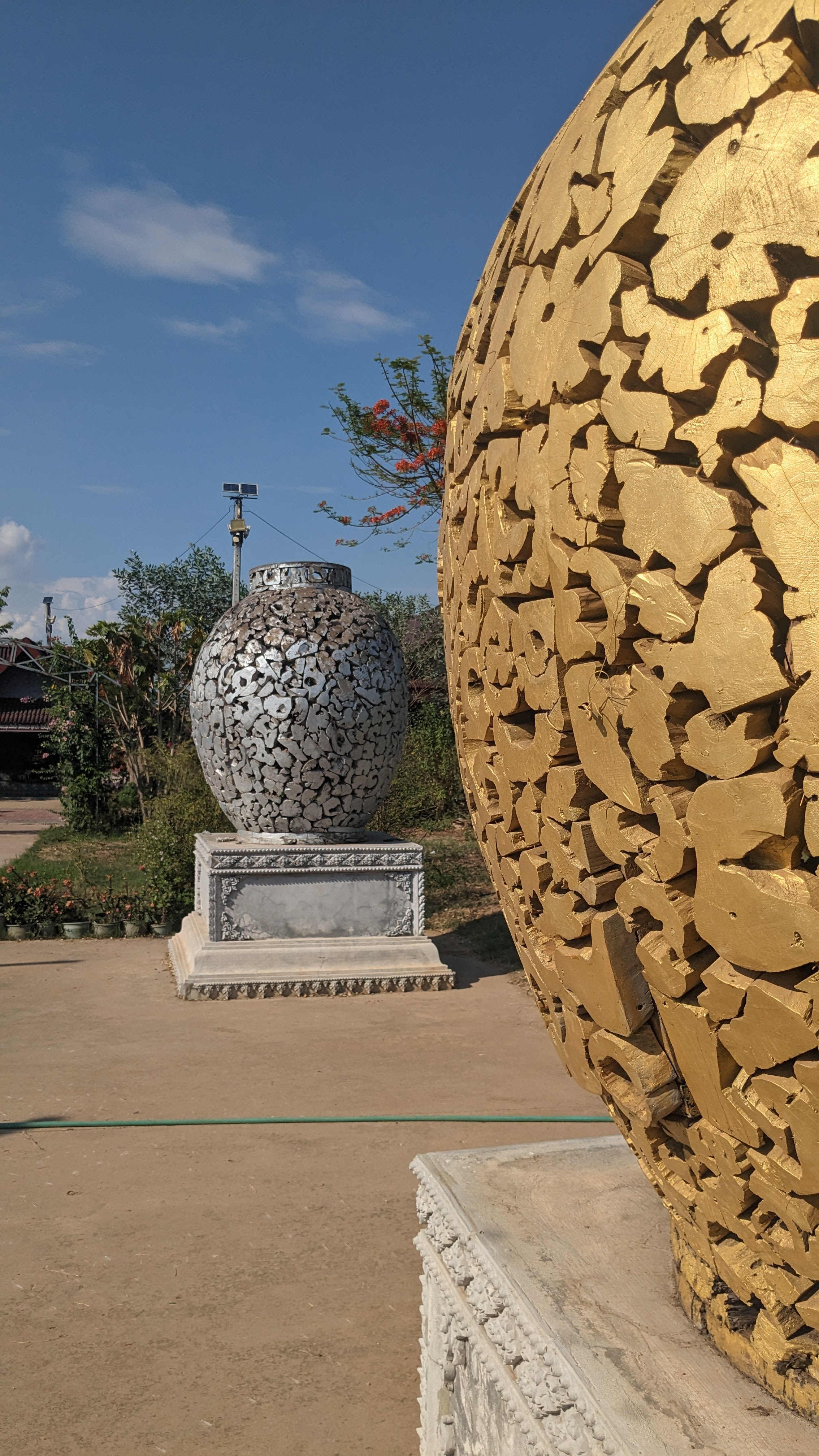

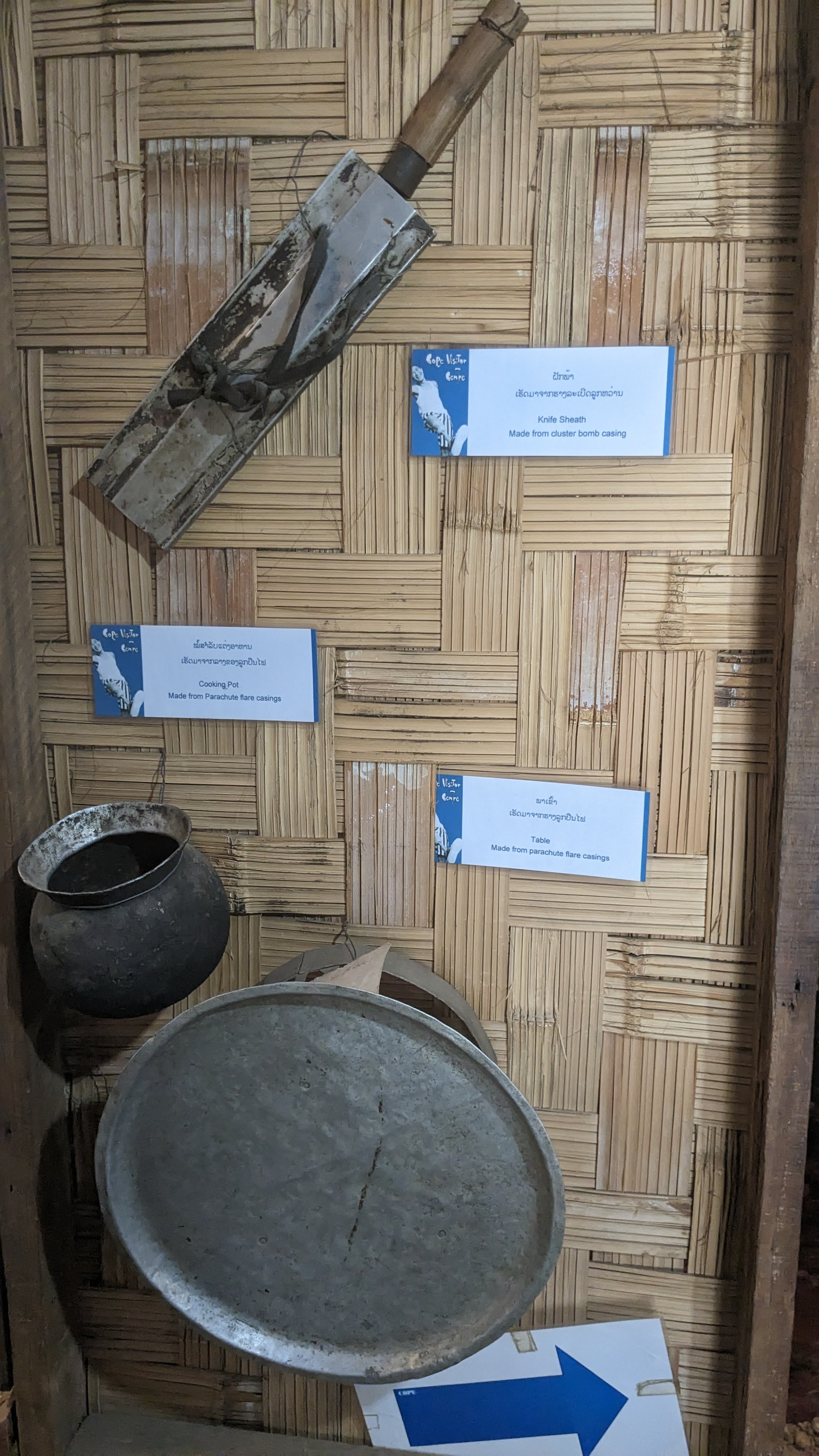
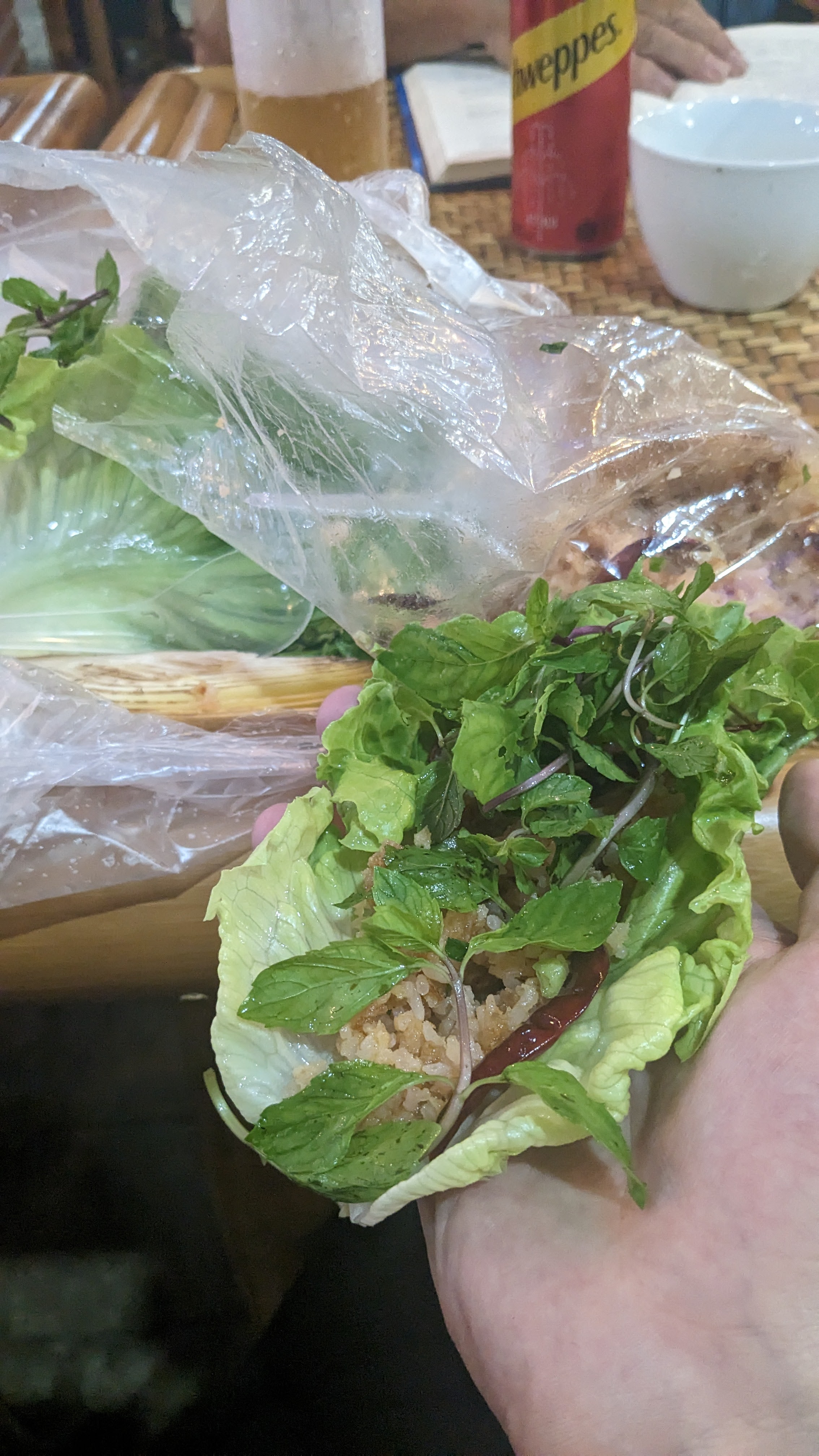
The next day I took the morning to do some writing, but ended up going to the COPE museum a little after noon, alongside Maya and a Thai-British guy I had recently met named First. The museum was focused entirely on unexploded ordinance (UXO) in the country of Laos, and the work being done in the country to defuse these bombs and care for those injured by them, particularly with prosthetic limbs and rehab programs. Much of this ordinance was dropped by the USA during what is known as The Secret War, a prolonged bombing campaign of much of the country with the stated goal of stopping the Ho Chi Minh Trail, a crucial supply route for the North Vietnamese army during the Vietnam War. Sadly but unsurprisingly, many innocent bystanders were hurt by the indiscriminate campaign, and that continues even to this day. An estimated 30% of the bombs dropped failed to explode, and now represent a looming threat for people all over the country. It was particularly poignant to see the grim silver lining the historically poor country has made of this history– all sorts of useful household items, big and small, made from metal casings and stray pieces from the bombs that have fallen. In front of the museum there was a statue made entirely from the same, old pieces of bombs that had either exploded or been found and defused. Feeling quite somber, particularly given my own country’s role in what I saw, we stepped out of the museum. On my way out I had a chance encounter with a group of American tourists there to see the museum as well. One older man who I spoke with asked to share his story, and revealed that he had been a soldier involved in dropping the very bombs during the Vietnam war. He mentioned not really thinking about the consequences of the bombs he dropped, and releasing entire payloads in more or less random places just to make sure the plane didn’t have an unexpected detonation while landing. He expressed hope that my generation wouldn’t make the same mistakes that his had. I left the conversation feeling really lucky to have met someone who would speak so candidly from the other side of the events, and a little awed to hear such a simple and human explanation for what, to the Lao people, was a brutal and cruel act. After this visit, I headed back to a hostel pool to relax for a little bit I walked around the town a little bit more, stepping into a local supermarket to find it remarkably well stocked, and after Maya left for Vang Vieng in the late evening, First and I went to eat at a local night market. When we arrived, there was already thunder rolling in the distance, and before we knew it we were frantically looking for a tarp to duck under as the rain poured down. We found one of the few stalls with a makeshift awning already in place, and then got to witness the entire night market scrambling to address the downpour. After things settled down and all the shops had either implemented passable rain precautions or just closed down we put in our orders. I got another delicious bowl of boat noodles, though they did taste fairly different from the ones I had tried in Pai, and a fried rice ball that was broken up, mixed with peppers and other seasoning, and paired with lettuce and various fresh herbs. After this wonderful dinner, First recommended asking for extra bags, placing them over our heads, and jogging back through the rain to a safe hostel as quickly as possible, apparently a common solution in this season of sudden downpours. Eager to try out the local culture, I of course agreed and after a brief and exhilarating run, we found ourselves safe and dry. We had about another kilometer to go before the hostel where we were both staying, but decided to stay at the other hostel and socialize with the guests, hoping for the storm to clear. Eventually we saw and seized our opportunity, and made our way back to our hostel in a brief dry spell. The next morning I had an early morning bus ride to Vang Vieng, a major tourist destination to the north, so I packed up early and again stepped onto the bus and headed off to a new part of Laos.




 Denali's Travel Blog
Leave a comment